
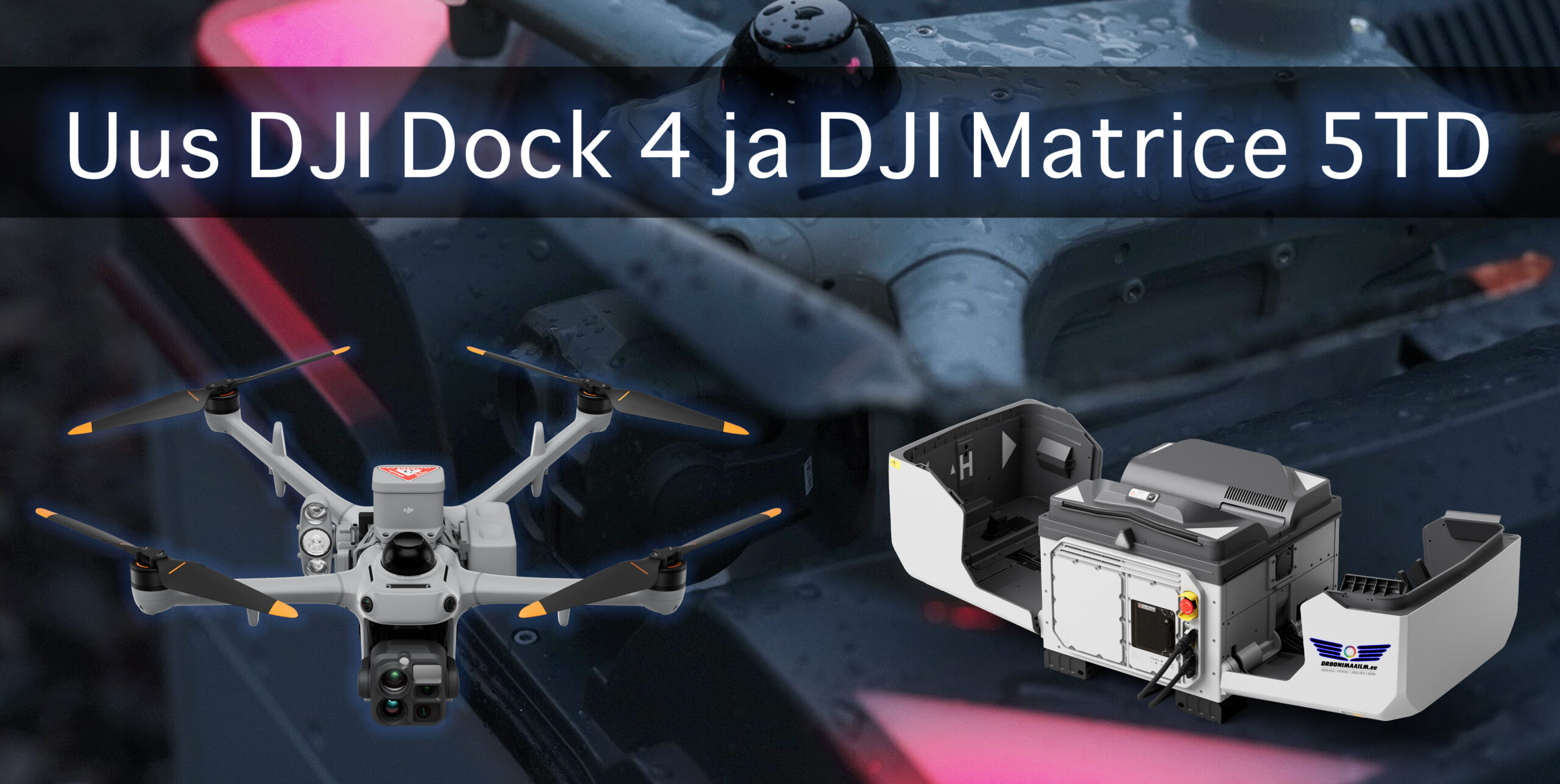
DJI Dock 4 and Matrice 5TD: how much better are they than Dock 3 and Matrice 4?
DJI Dock 4 and Matrice 5TD take automated drone monitoring to the next level: up to 59 minutes of flight time, a 1280 × 1024 thermal camera and automatic battery swapping in approximately 25 seconds. Their biggest advantage over Dock 3 is the ability to dispatch the drone quickly on its next mission without waiting for the same battery to recharge in the dock.
DJI introduced its new Enterprise system on 14 October 2026. The upgrades span the entire workflow: flight readiness, image detail, cold-weather operation, obstacle detection and mission management. What do these changes deliver in practice, and when does an existing Dock 3 or Matrice 4 remain a sensible choice?
This article compares specifications published by the manufacturer. It is not a Droonimaailm hands-on flight test; percentage improvements calculated from laboratory figures do not imply the same gains in every operating scenario.
What are DJI Dock 4 and Matrice 5TD?
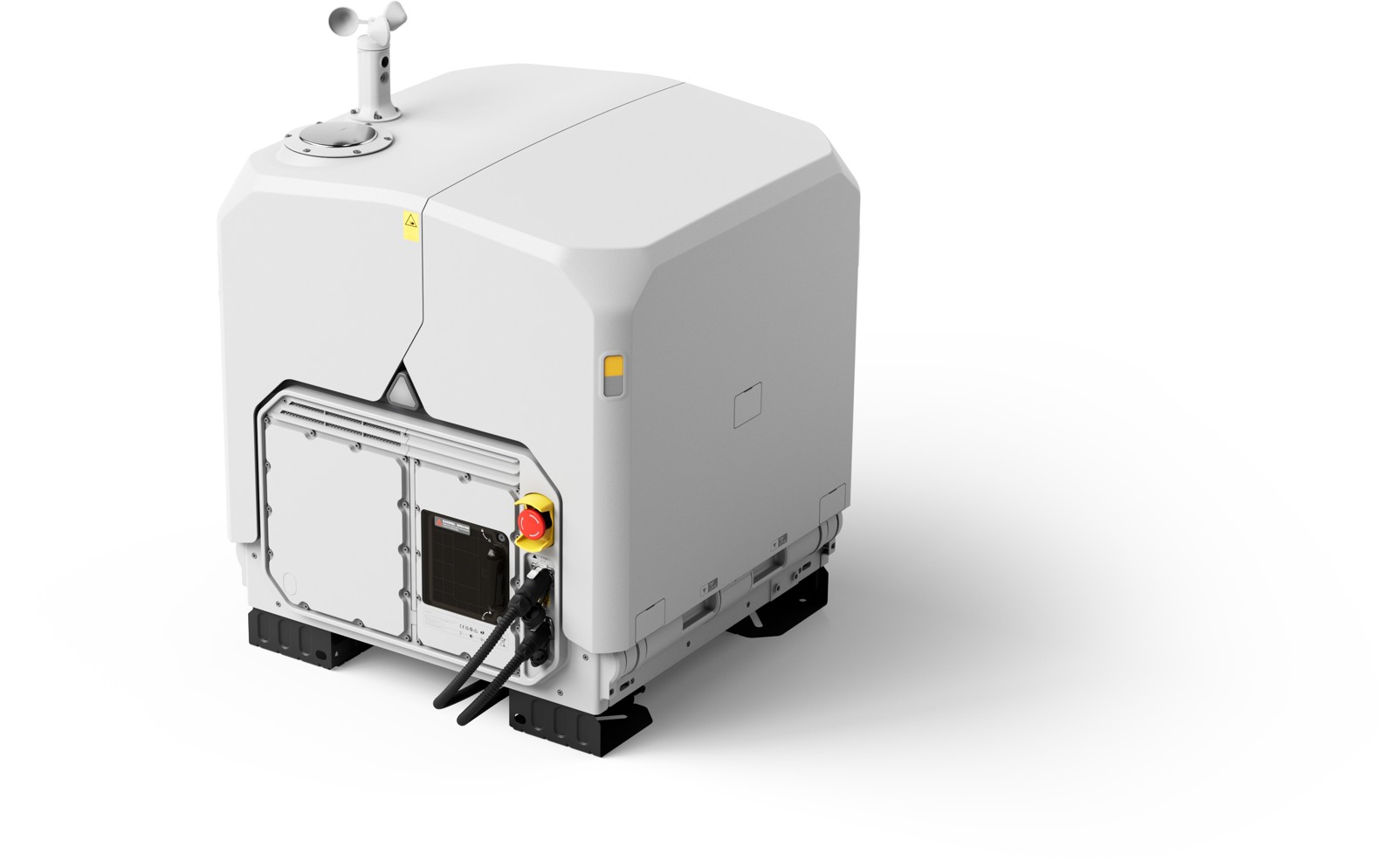
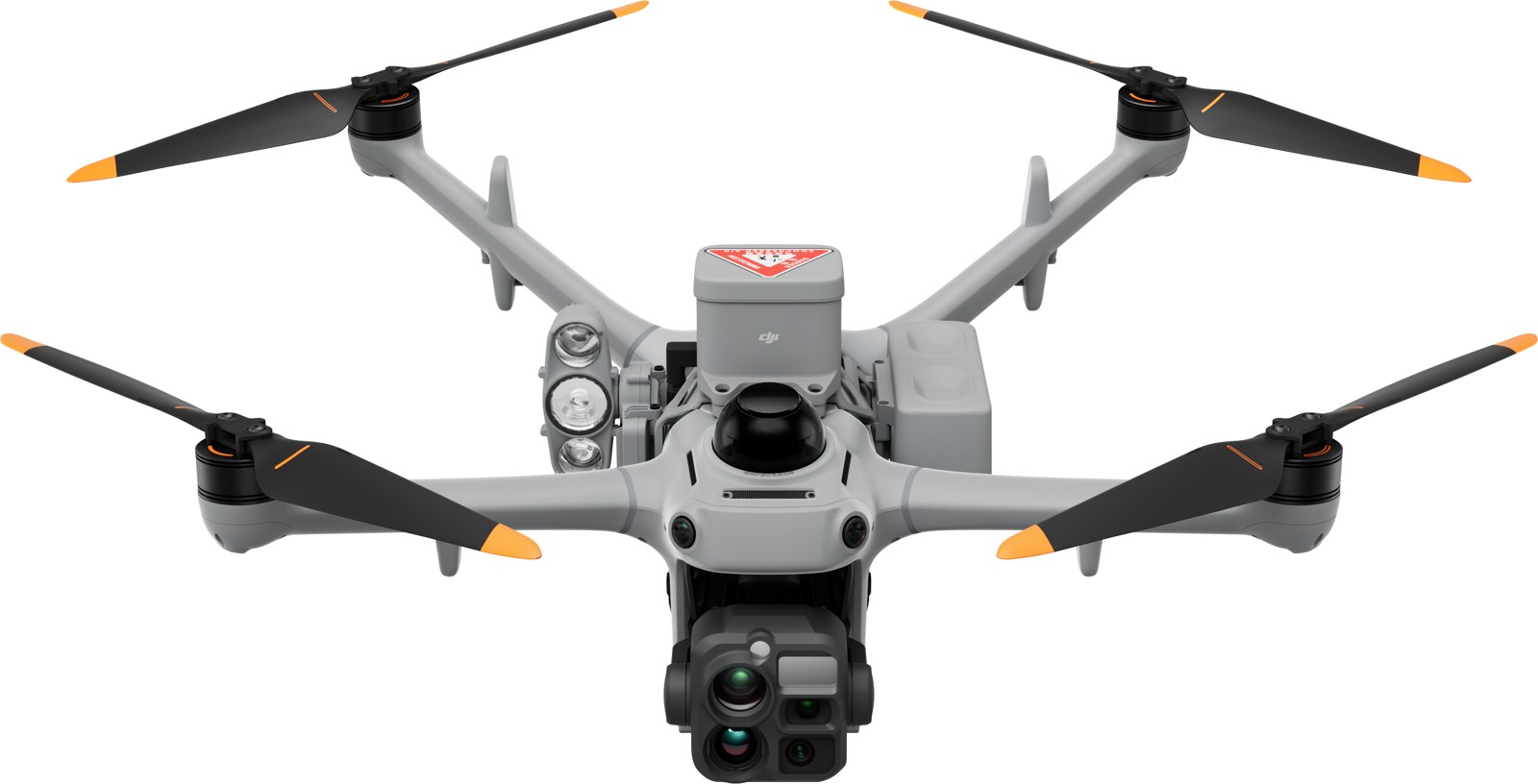
Dock 4 is an automated station where a drone can land, shelter, swap its battery and prepare for its next flight. Matrice 5TD is the camera and thermal-imaging aircraft designed for it. Combined with remote management software, the system can support industrial inspections, perimeter monitoring and rapid situational awareness at an incident site.
- Automatic battery swapping: under 25 seconds for the specified swap cycle, according to DJI.
- Maximum flight time: up to 59 minutes.
- Native thermal resolution: 1280 × 1024 pixels.
- Telephoto camera: 11× class magnification, with a 252 mm equivalent focal length.
- Operating temperature: –40 to +50 °C for both the dock and aircraft.
- Accessory payload capacity: up to 450 g.
The biggest change: swapping batteries instead of waiting to charge
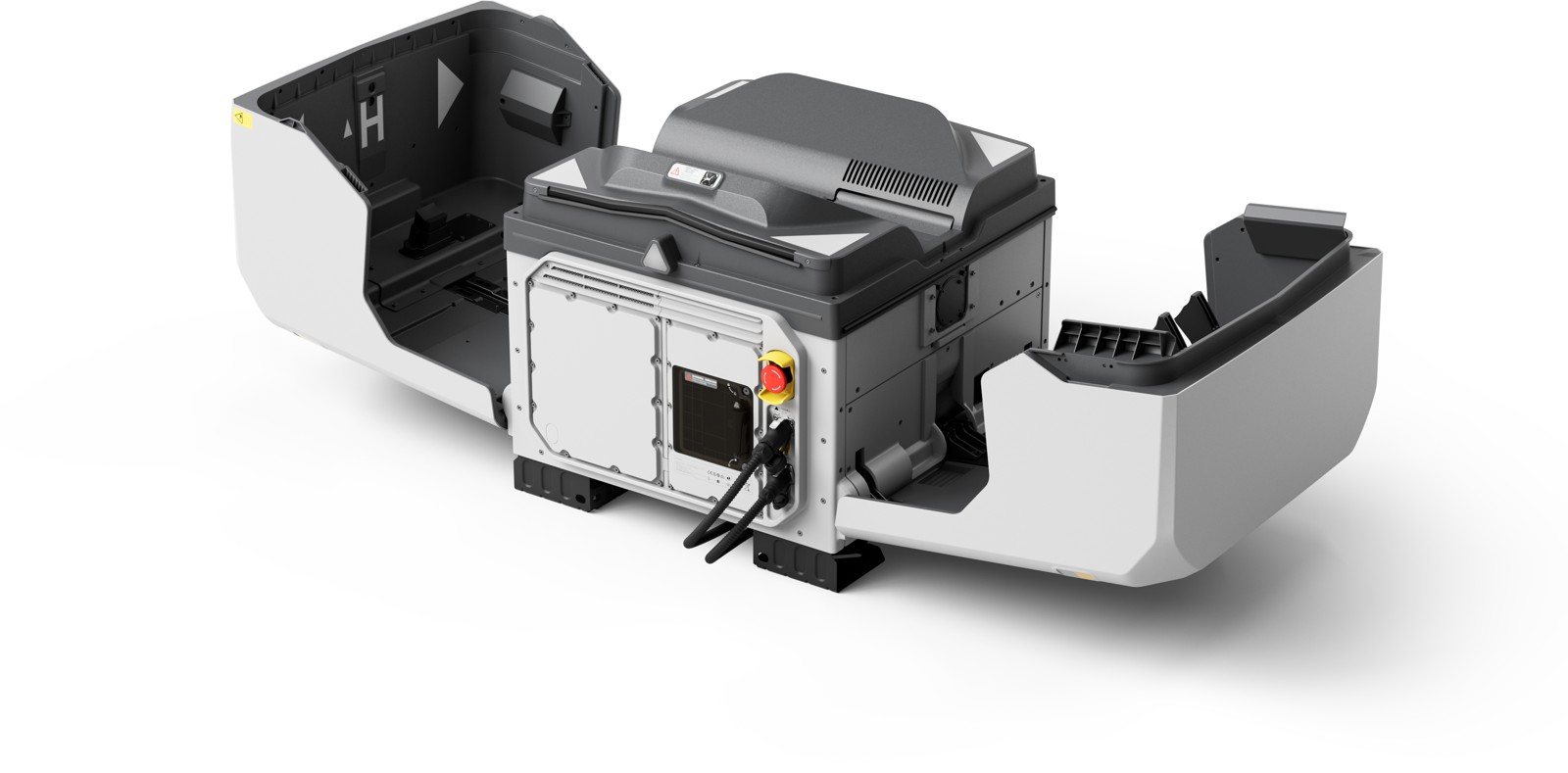
Dock 3 recharges the battery in the aircraft after landing. Dock 4 adds the ability to install an already charged spare. This mainly changes how consecutive flights are managed: after one inspection round, the same aircraft can quickly start another mission.
25 seconds is not the total time from landing to the next take-off. In the brochure, the battery-swap measurement starts when the dock lid has fully closed. DJI’s specifications state that the complete landing-to-relaunch cycle can take less than 45 seconds under laboratory conditions.
Dock 4 has four battery positions, one of which must remain free for swapping; the dock can store up to three batteries. Two charging channels support the rotation: one battery powers the aircraft while the others prepare for subsequent flights.
Dock 3’s published charging time from 15% to 95% is 27 minutes at 25 °C. Dock 4 lists the same 27-minute figure for that charge interval. Therefore, the new generation does not recharge a battery in 25 seconds — its advantage is the automatic deployment of a charged battery. The frequency of consecutive flights still depends on battery numbers, charging, power supply and mission duration.
Dock 4 vs Dock 3: what do the numbers show?
The like-for-like dock-system comparison is between Dock 3 + Matrice 4TD and Dock 4 + Matrice 5TD. The manually operated Matrice 4T is a separate solution and is not the aircraft used by Dock 3. On mobile devices, scroll the table horizontally.
| Capability | Dock 3 + Matrice 4TD | Dock 4 + Matrice 5TD |
|---|---|---|
| Maximum flight time | 54 min | 59 min: +5 min, or approximately +9% |
| Readiness for the next flight | Battery charging in the dock | Automatic battery swap in under 25 s; complete relaunch cycle in under 45 s under laboratory conditions |
| Native thermal resolution | 640 × 512 | 1280 × 1024: four times as many pixels |
| Telephoto focal length | 168 mm equivalent | 252 mm equivalent, 11× class |
| Published laser rangefinder range | Up to 1800 m | Up to 3000 m; test conditions differ |
| Dock operating temperature | –30 to +50 °C | –40 to +50 °C |
| Aircraft operating temperature | –20 to +50 °C | –40 to +50 °C |
| Ingress protection rating | Dock IP56, aircraft IP55 | Dock IP56, aircraft IP55 |
| LiDAR and millimetre-wave radar | Available with a separate obstacle-sensing module | Integrated into the aircraft |
Maximum figures were obtained under conditions specified by the manufacturer. Accessories, wind, temperature, battery reserve and flight profile affect actual results. The thermal comparison uses native sensor resolution rather than digitally enhanced output.
59 minutes of flight time: more time over the site
Compared with Matrice 4TD’s 54 minutes, the published maximum flight time increases by five minutes, or approximately 9.3%. Compared with the manually operated Matrice 4T’s maximum of 49 minutes, the difference is ten minutes, or around 20%. These are comparisons of technical maximums, not results from a controlled test on the same route.
Longer endurance provides more planning flexibility: a single flight may cover a longer section of infrastructure or an additional observation circuit at an incident site. Travel to the site, the return flight and a safe battery reserve must still be allowed for. A 59-minute flight time does not mean 59 minutes over the target.
Matrice 5TD’s maximum speed of 21 m/s applies to FlyTo missions; other modes are limited to 15 m/s. It should not be treated as a universal patrol speed in every environment. Speed, obstacle detection and mission-specific risks must be considered together when planning a flight.
Thermal imaging: four times as many native pixels
One of Matrice 5TD’s most significant upgrades is its 1280 × 1024 thermal image. Matrice 4TD and Matrice 4T have a native thermal resolution of 640 × 512. The new camera therefore has twice as many pixels in each dimension and four times as many native image pixels overall.
This creates the potential to resolve finer detail from the same distance. When inspecting a solar farm, electrical installation or large industrial site, for example, a more clearly defined hot spot may help identify the component that needs closer inspection.
It is important to distinguish native sensor resolution from Super Resolution. The Matrice 4 generation’s digitally enhanced 1280 × 1024 output is not equivalent to Matrice 5TD’s native thermal image of the same dimensions. Four times as many pixels also does not mean four times more accurate temperature measurements: distance, target properties and measurement settings still affect the result.
The new system supports visible-light and thermal image fusion. This helps relate a temperature difference to an object or structure visible in the conventional image. The visible-light camera’s full-colour night view complements thermal monitoring when a heat signature alone does not provide enough context.
A longer telephoto lens and laser ranging up to 3 km
The 11× class telephoto camera helps operators inspect small details from farther away. Its 252 mm equivalent focal length is 50% longer than the predecessor’s 168 mm figure. This means a narrower field of view and a larger image of the subject in the frame, not a general promise of 50% better image quality.
The published laser rangefinder range increases to three kilometres. This is a substantial step beyond the predecessor’s maximum of 1800 metres, but the manufacturer’s test conditions, including target reflectivity, differ. Visibility, the target and atmospheric conditions also affect real-world results.
These tools work together during a monitoring mission: the wide view provides context, the telephoto camera checks details and the rangefinder supports assessment of the target’s location. The entire observation workflow matters more than any single specification.
Built-in obstacle sensing and improved cold-weather capability
Matrice 5TD combines six-direction visual sensing, rotating LiDAR and millimetre-wave radar. DJI also highlights detection of thin obstacles such as wires. A LiDAR-and-radar accessory module was available for the Dock 3 generation too; the new model integrates these sensors into the aircraft.
Integrated sensors simplify system configuration, but obstacle sensing cannot guarantee avoidance of every wire or branch. The environment, speed and sensor operating conditions remain important. Obstacle-avoidance LiDAR is also not equivalent to a dedicated surveying LiDAR payload.
For users in Estonia, the –40 °C minimum operating temperature of both dock and aircraft is particularly relevant. The previous system’s corresponding limits were –30 °C and –20 °C. The new limits offer greater scope for cold-weather operation, but wind, icing, precipitation and battery condition require separate assessment. The IP56 and IP55 protection ratings are unchanged between generations.
FlightHub 2 and AI: turning flights into actionable information
DJI FlightHub 2 sits at the centre of Dock 4 operations. Product materials highlight Copilot, multimodal-model workflows and the breakdown of tasks into route planning, dispatch, detection, analysis and reporting. According to DJI, the aircraft’s onboard AI supports detection of 17 object types.
The practical aim is to shorten the time between a question and an answer. Operators often need to know whether a site has changed, where attention is required and which images should be retained for follow-up work. Automated flight is only one part of that process.
FlightHub 2 and remotely managed workflows were already part of the Dock 3 ecosystem. Not every software enhancement can therefore be counted as an exclusive advantage of Dock 4 hardware. A project should confirm licensing, regional availability and compatibility for each required function.
According to the product materials, the new solution also offers dispatch from the DJI Enterprise app, on-premises FlightHub 2 cluster deployment and O4 Ground Station connectivity options. Frequency bands and permitted use vary by region, so the configuration must suit operating conditions in Estonia.
A 450 g accessory payload and more options on site
Matrice 5TD’s accessory payload capacity of up to 450 g supports mission-specific equipment. DJI’s materials feature a speaker, a spotlight with multiple modes, multicolour warning lights and an optional parachute. The final configuration must match the aircraft’s supported accessories and permitted weight.
A spotlight can help with orientation on a poorly lit site, while a speaker can relay instructions. Accessories also affect weight, power consumption and flight time. A parachute may form part of a safety solution; it does not replace flight planning or any approvals required for the operation.
Who benefits most from Dock 4?
- Monitoring that needs rapid relaunch: when an incident requires several consecutive flights, automatic battery swapping offers the most direct benefit of the new generation.
- Thermal inspections: at electrical, energy and industrial sites, higher native thermal resolution is a more meaningful improvement than simply greater digital magnification.
- Permanently installed winter monitoring: greater cold tolerance helps operators plan missions at lower temperatures.
- Large and dispersed sites: longer flight time and the ability to inspect details from farther away may reduce the need to fly close to each observation point.
These are potential benefits, not a promise of coverage for a particular site or uninterrupted flight around the clock. Even a battery-swapping station needs power, connectivity, maintenance and suitable weather.
Should you replace Dock 3 or Matrice 4 immediately?
Dock 4 is a strong candidateif your existing system is limited by charging downtime, thermal image detail or low operating temperatures. If these limitations do not affect daily work, the new model does not automatically make an existing Dock 3 system inadequate. Scheduled inspection rounds may leave ample time for charging.
Matrice 4T remains well suited to mobile teamsthat travel between sites and need a thermal drone they can operate locally. A permanent dock requires a different workflow and infrastructure. For Matrice 4E and Dock 3’s Matrice 4D, the mapping-oriented mechanical shutter is another important selection factor. The new thermal-monitoring platform is not automatically the better tool for every surveying task.
DJI’s Matrice 5TD materials also highlight photogrammetric results in the 10 cm class in a 12 MP operating mode. Without assessing the project’s measurement method, control points and required accuracy, this cannot be treated as a guaranteed surveying accuracy for every flight.
Consider compatibility from the outset: Dock 4 is designed for Matrice 5TD. Matrice 4T/4E do not become dock-compatible aircraft, and an existing Dock 3 should not be assumed to support conversion for Matrice 5TD. An upgrade should be assessed as a complete system, including infrastructure and software.
Planning a Dock 4 solution in Estonia
The right choice starts with the mission: what needs to be detected, how soon is another flight required and what result does the decision-maker need? From there, assess installation, power, communications coverage, battery rotation, maintenance, data handling and operational arrangements.
Want to know whether Dock 4, Dock 3 or a mobile Matrice is the best fit for your site? Contact Droonimaailm. We can help define your requirements and clarify the right configuration, availability and quotation.
Sources and specification notes
This article is based on the DJI Dock 4 / Matrice 5TD product brochure and product information published by DJI. Specifications checked on 28 October 2026. Images and product materials: DJI.
Download the DJI Dock 4 and Matrice 5TD product brochure in English (PDF).